Author Koh Lin ◦
An iconic Australian bird, that can be quite inquisitive. I remember seeing them following our four-wheel drive along a country path, before they ventured off. Another time, in a desert park, they came to the fenceline where we were standing, it was as if they wanted to check us out and maybe have a chat…

The Emu can be seen defined by the Milky Way (with the dark patches and the Southern Cross), they are described as creator spirits, and are in dreaming stories found across Australia.
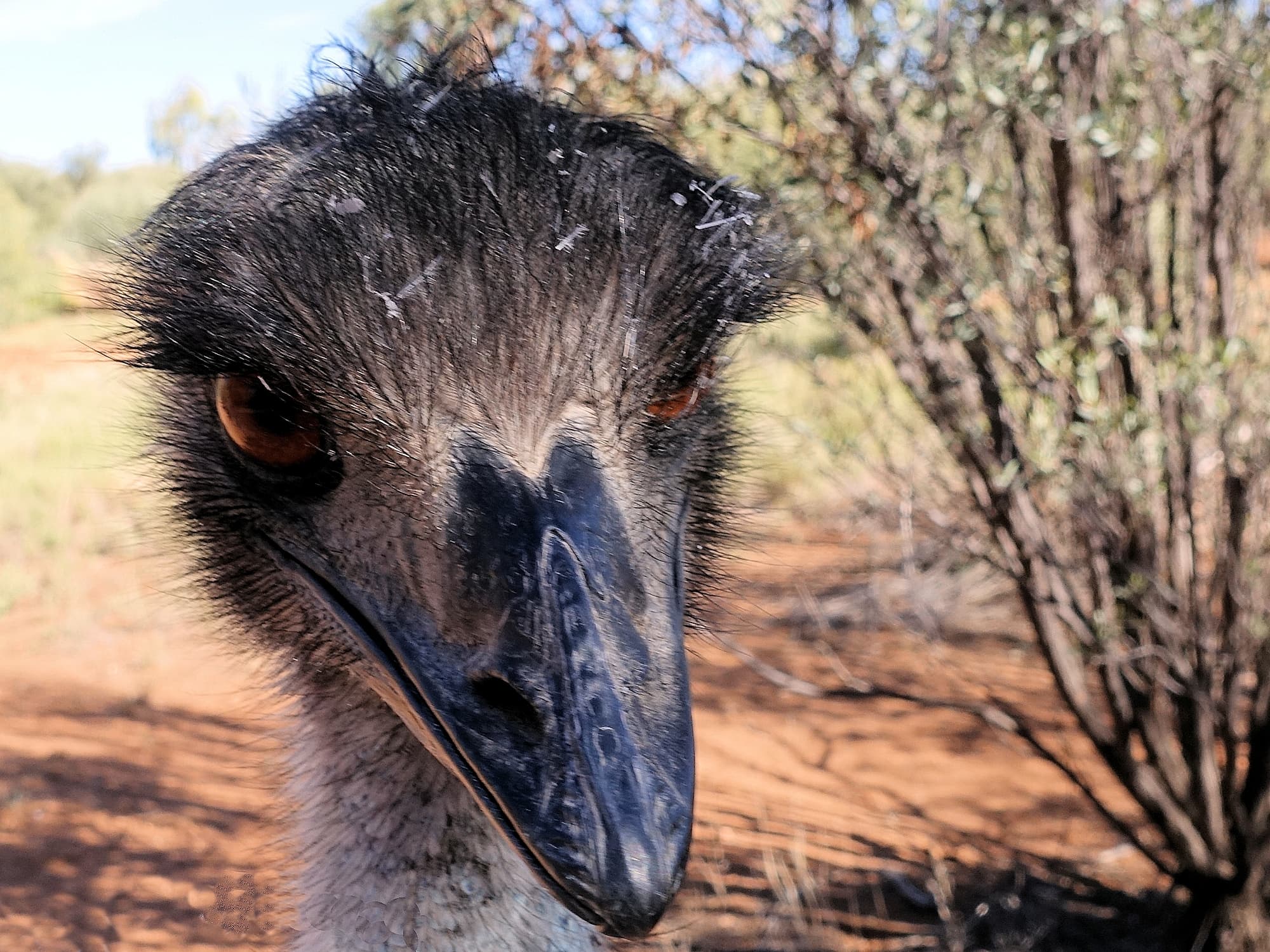
Emu (Dromaius novaehollandiae) is Australia’s largest living flightless bird, up to 1.9 metres in height and can weigh up to 45 kg and more. Whilst found across much of mainland Australia, they are rare seen in heavily populated areas. The emu is in the order Struthioniformes, that includes the Australian cassowary.
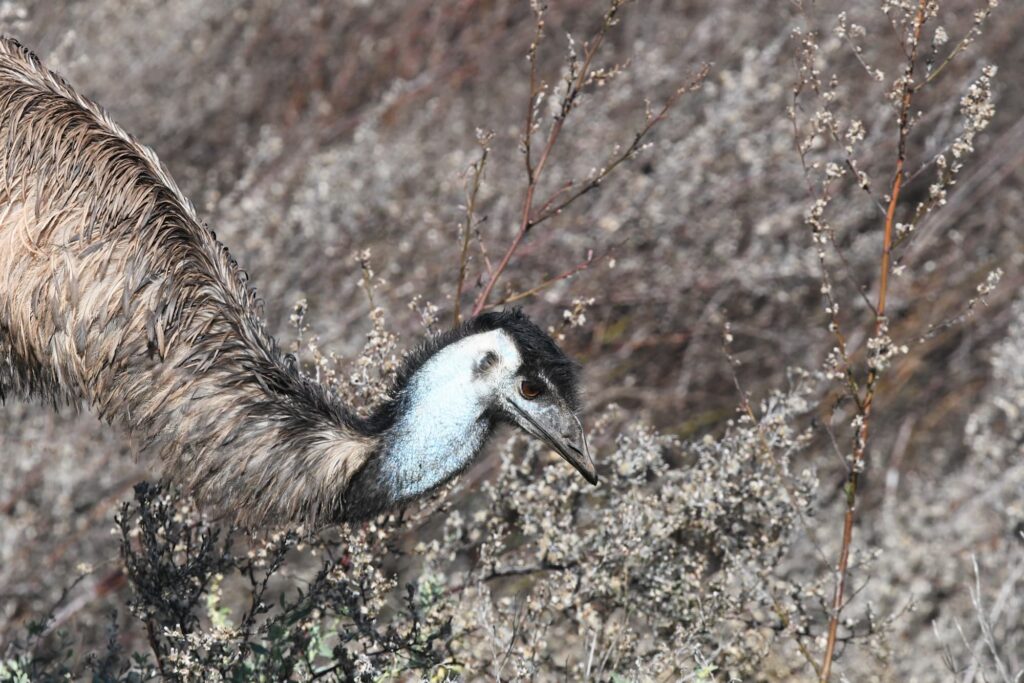
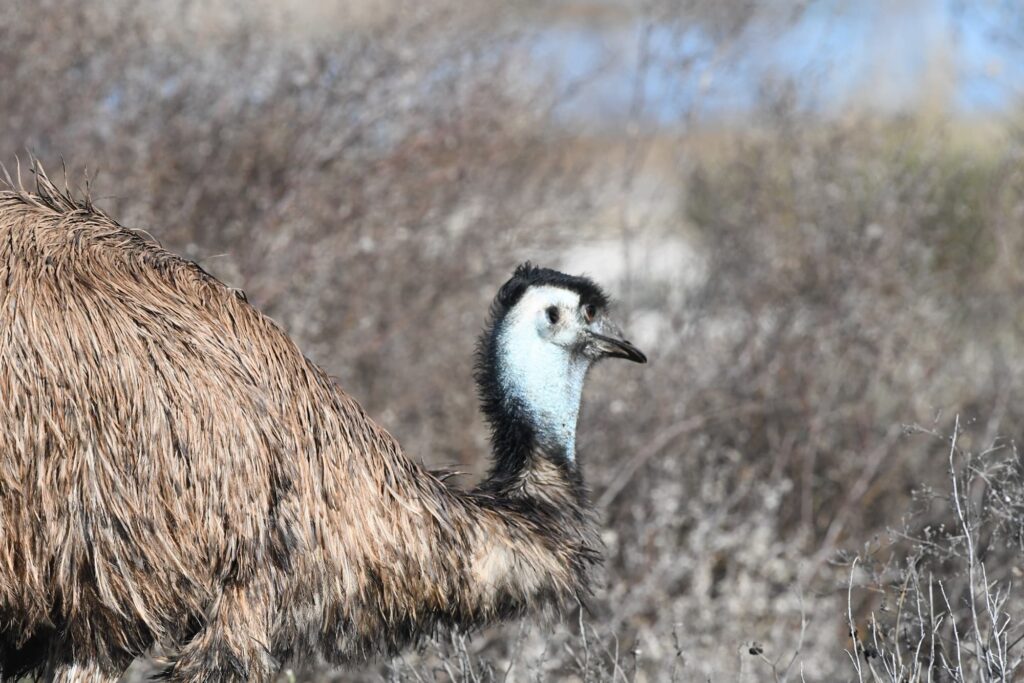
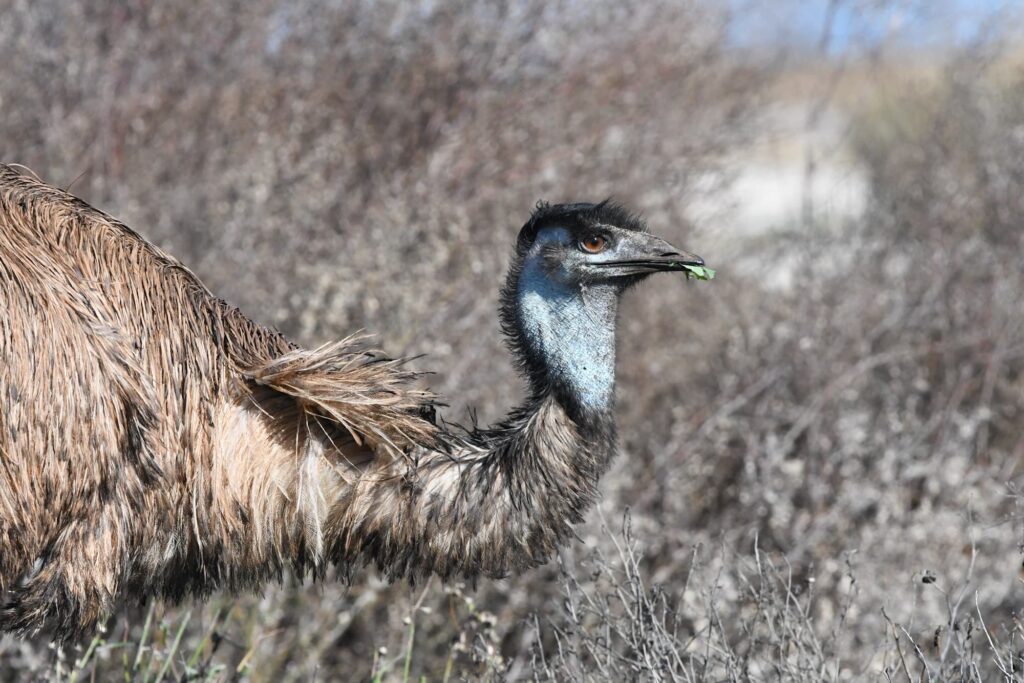
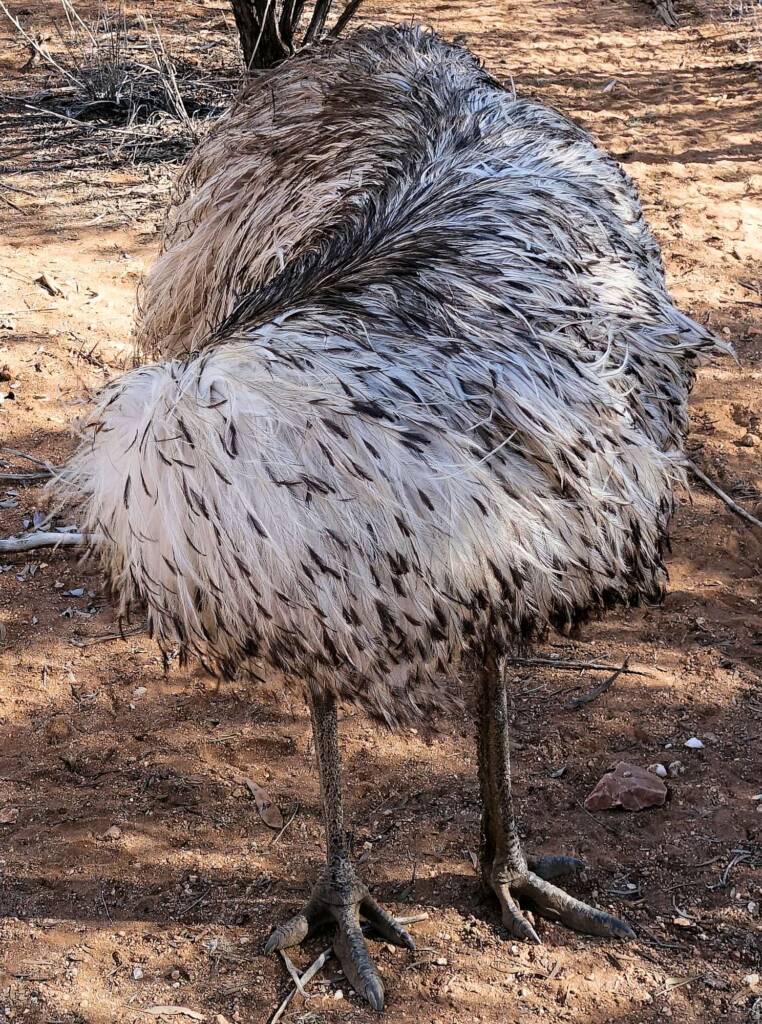
Adult emus are covered in a mass of feathers on their main body, that remind me of feather dusters. If ever you have felt a feather duster made of emu feathers, you will find that they are really soft to the touch.
The feathers are shades of grey to brown and white, that give the emu a shaggy look. The neck and head of the emu have less feathers, with areas near the face having slight short covering of feathers, that have a bluish-black, brown and/or white colour. They have three forward-facing toes, greatly reduced wings, a long neck and legs. They are known to travel great distances, and have been recorded sprinting at 50 km per hour.



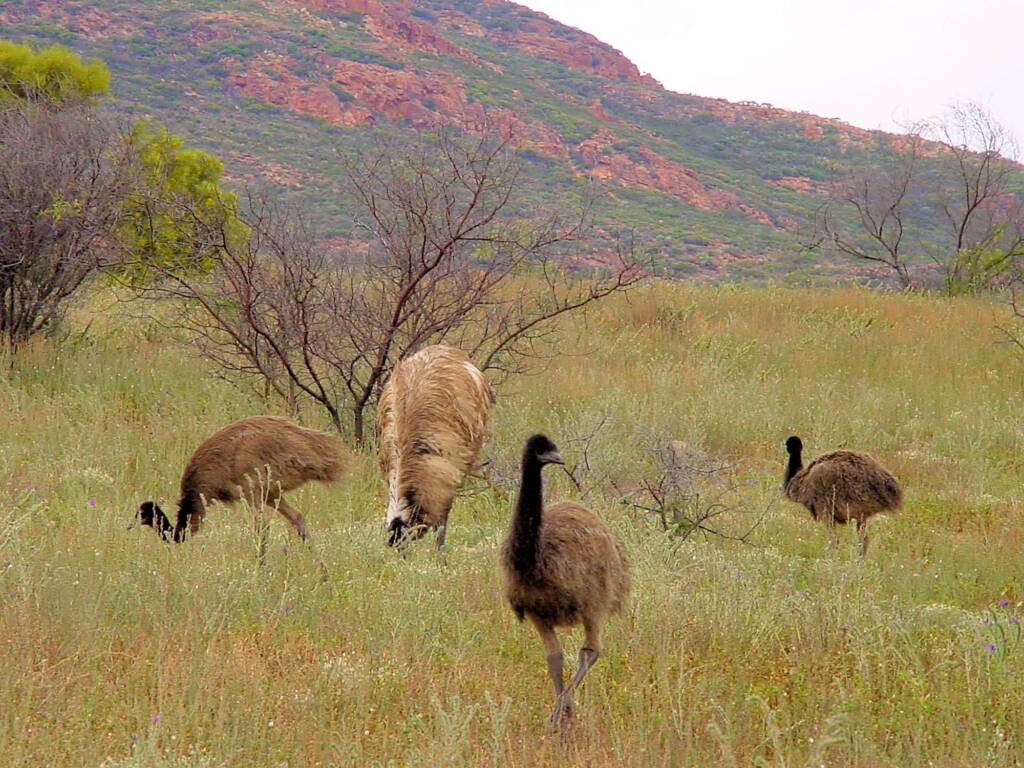
Emus can often be found in their natural habitats, as seen here in the Flinders Ranges of South Australia.

The emu features in many Aboriginal dreamtime stories and depicted in Aboriginal paintings…
In the Dreamtime more than 300 emus travelled across the Central Australian region from the west to the north, many of them died leaving behind significant sites and stories. While they were travelling one of them decided to search for a particular bush tucker kujuta (bush tomato).
This Emu came across an old turkey in Nulykurrong, my grandfathers country. The emu asked the turkey if he had any Kujuta. The turkey told the emu he had only dry, sweetless Kujuta. The emu was suspicious and stayed around waiting for the turkey to wander off. When the turkey went away the emu searched an area where he had seen the turkey laying about.
As he walked around he came across a big tree and behind the tree was a deep trench filled with kujuta. The emu tasted one of the kujuta and it was sweet and tasty. The turkey returned and found the emu eating his hidden store of Kujuta.
Source: Raymond Walters Japanangka
Check out our other pages on Emus:
- Emu (Dromaius novaehollandiae)
- Emu at the Ponds
- Emu (Alice Springs Desert Park)
- The Art of Emu
- Roo Emu Dreaming
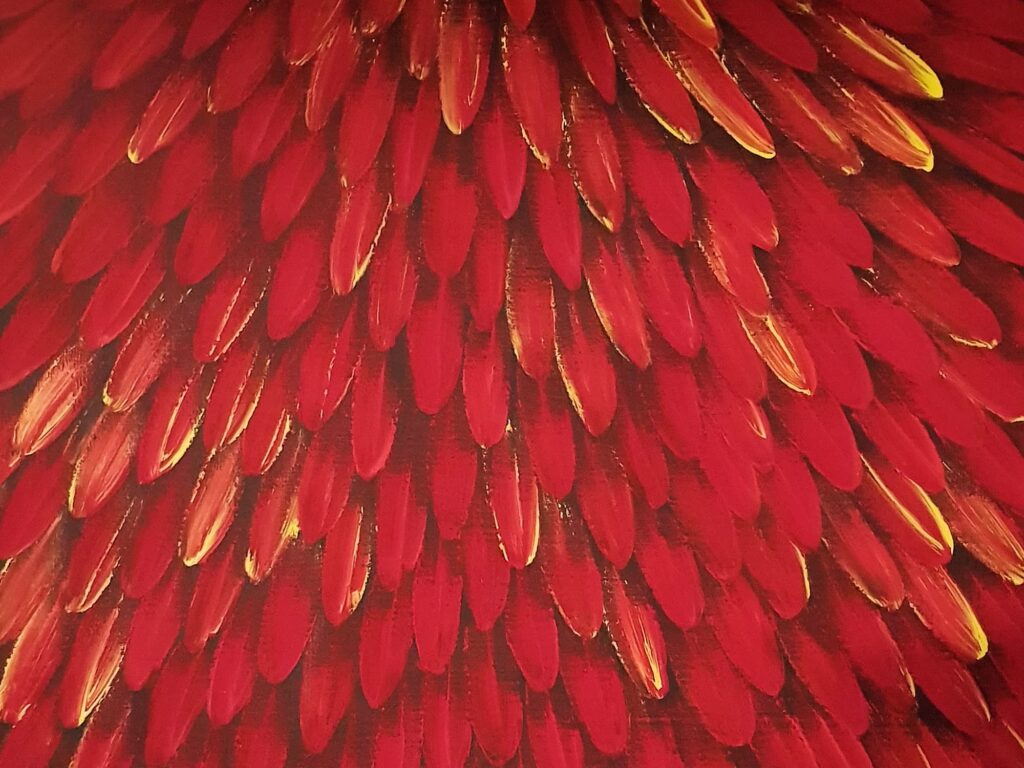
- Ankerre Jukurrpa (Emu Feathers)
- Emu Dreaming
- Emu (Aboriginal Symbols)