Australian Orthopteroids
OrthopteraAustralian Orthopteroid Index Garden Mantis Grasshoppers and Locusts Grasshoppers Blistered Pyrgomorph Coryphistes sp Giant Grasshopper (Valanga irregularis) Leichardt’s Grasshopper (Petasida ephippigera) Macrotona Queensland Spotted Pyrgomorph (Greyacris profundesulcata) Katydids (family Tettigoniidae) Phaneropterinae Psedna nana (Variable Psedna Grasshopper) Toadhopper (Buforania crassa)
Grasshopper, refers to any member of the suborder Caelifera of the order Orthoptera. Locusts are actually grasshoppers that have developed gregarious behaviours, brought about by optimum environmental conditions.
Primarily herbivores, grasshoppers (and locusts) become agricultural pests when their numbers increase to huge numbers consuming agricultural crops.
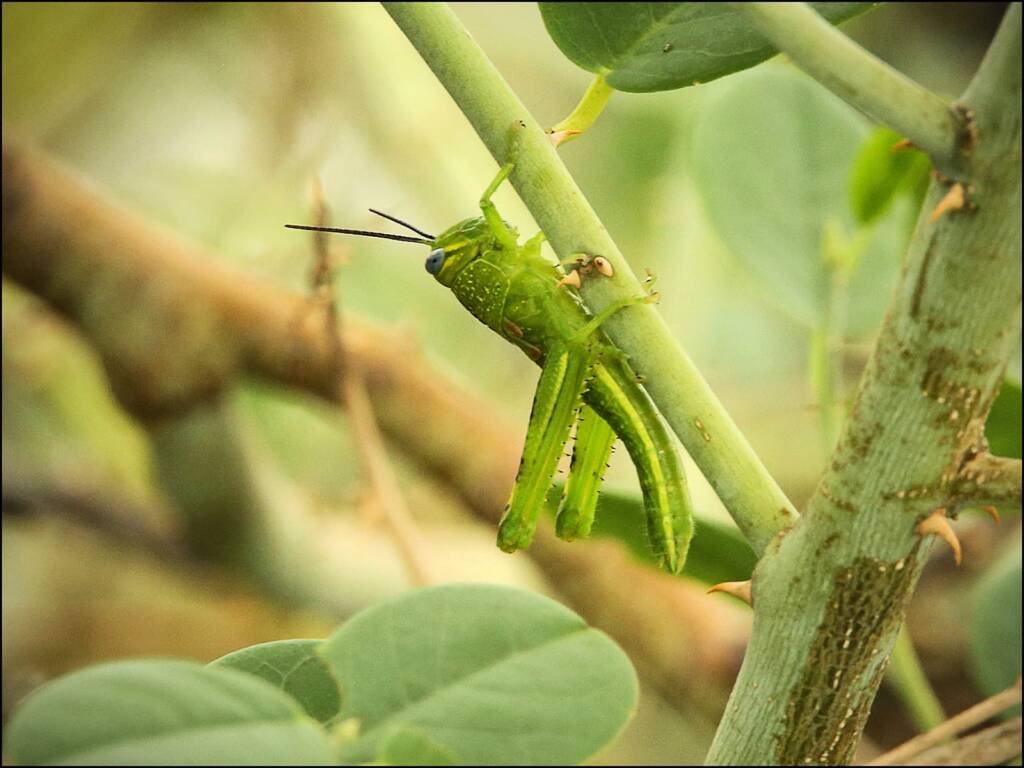
This behaviour often happens after a dry spell followed by a period of dense vegetative growth. Drought also is a driver for locusts to crowd in small areas, especially where there is vegetation. This environmental driver sees the locusts abandon their solitary phase as grasshoppers, reproducing at dramatically high rates, to form bands of nymphs and then swarm as adults.
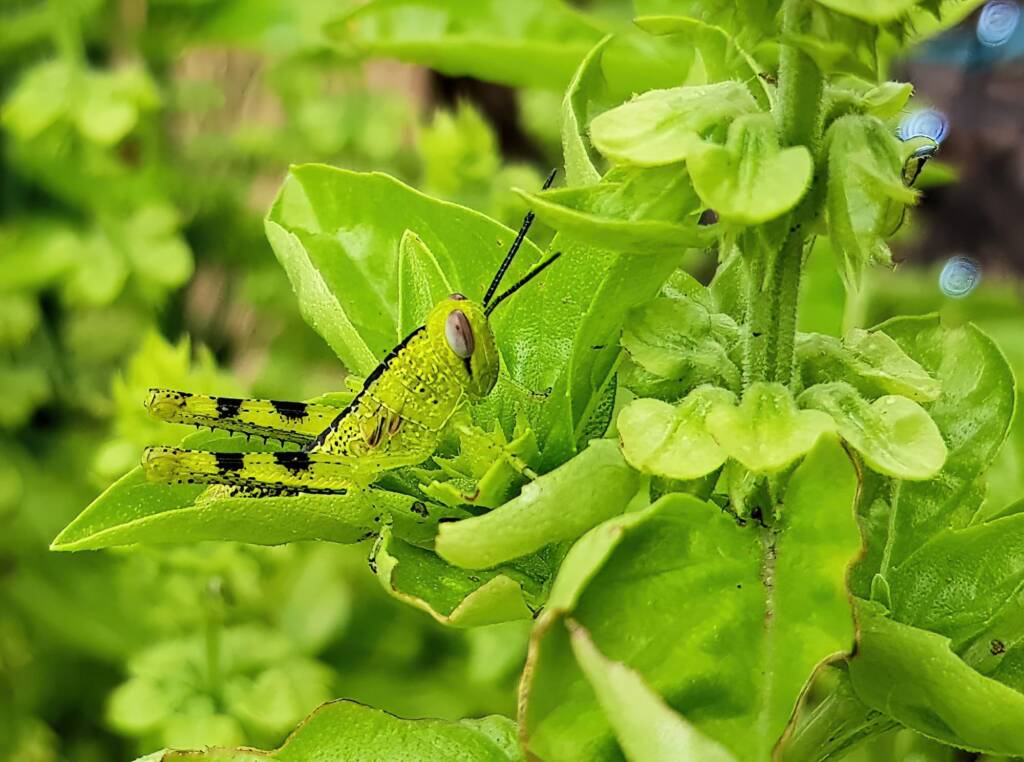
These swarms of locusts move in a single direction stopping on any green areas, resulting in extensive damage to crops. In this phase, locusts are known to cover long distances in short periods.
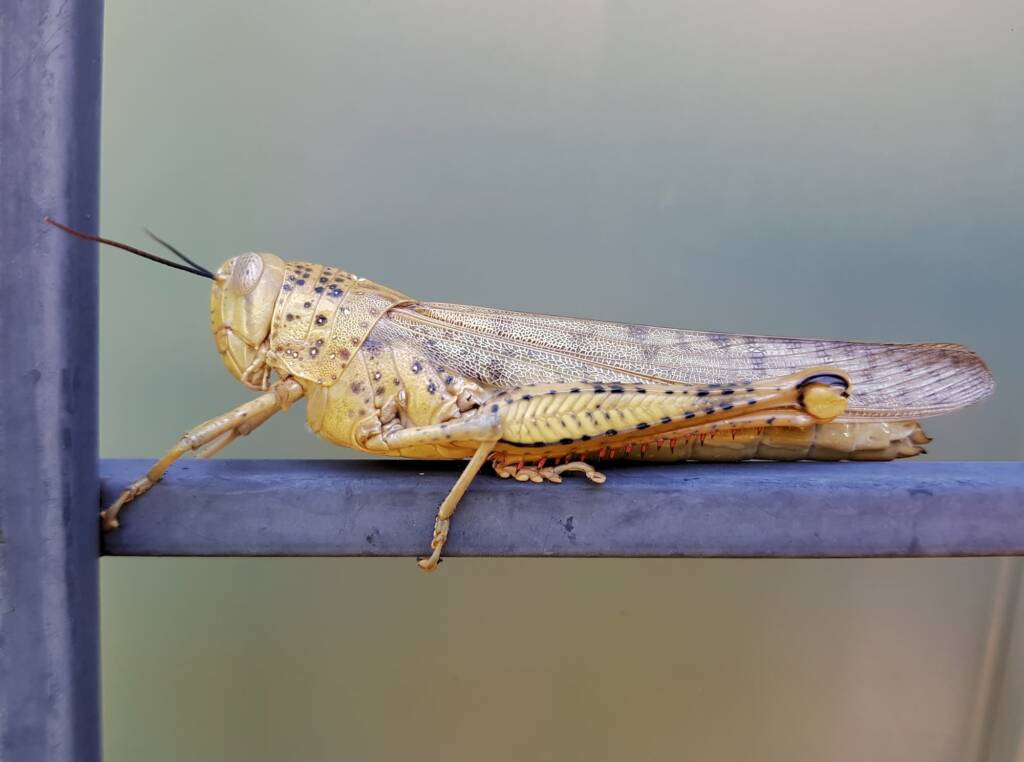
Some points about grasshoppers:
- Grasshoppers are ground-dwelling insects that go through instar phases before developing into the adult stage.
- Living mainly on the ground, grasshoppers have powerful hind legs, adapted for escape in event of being in danger.
- Grasshoppers can only fly for short distances.
- Grasshoppers mainly exist within a solitary phase
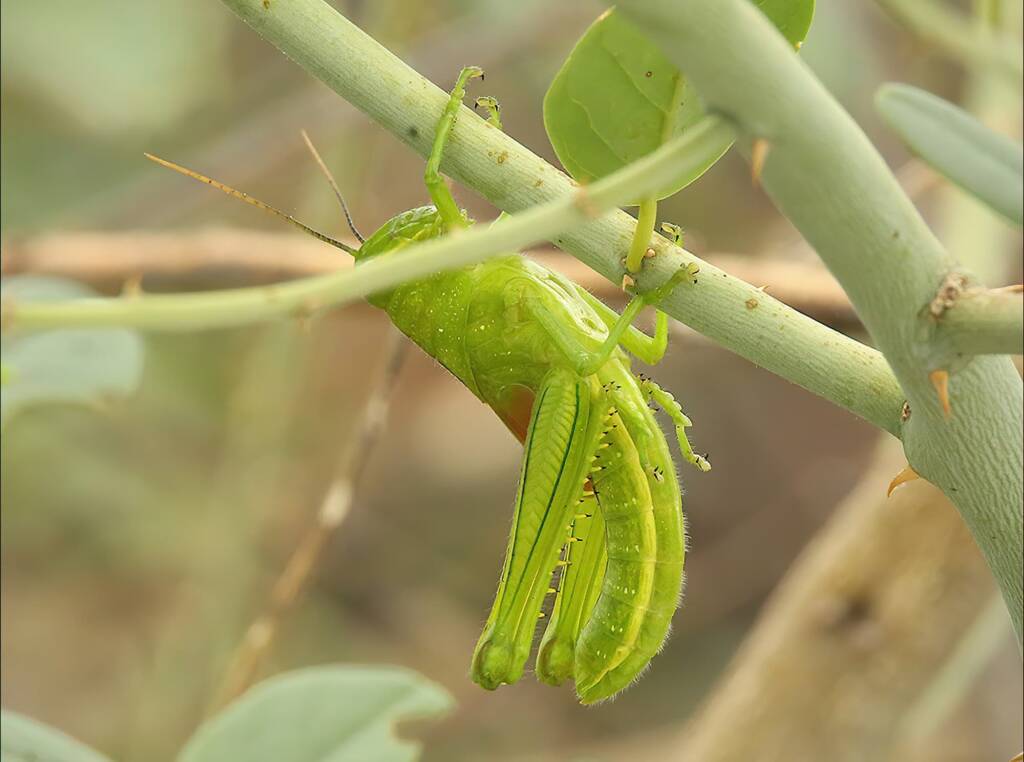
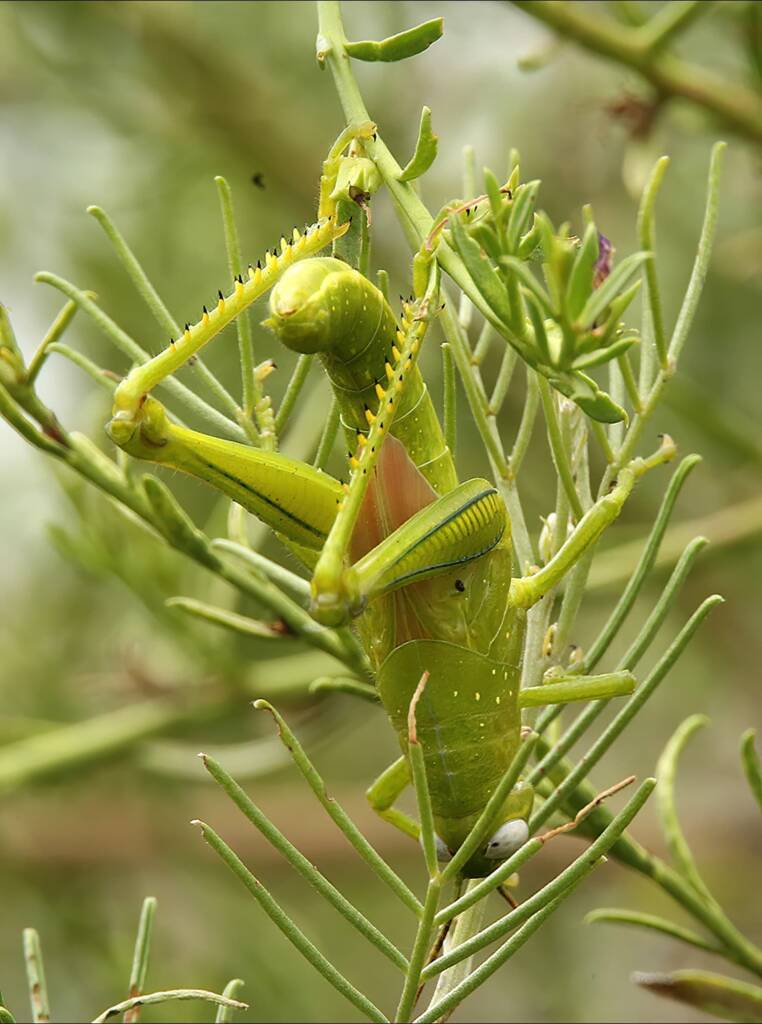
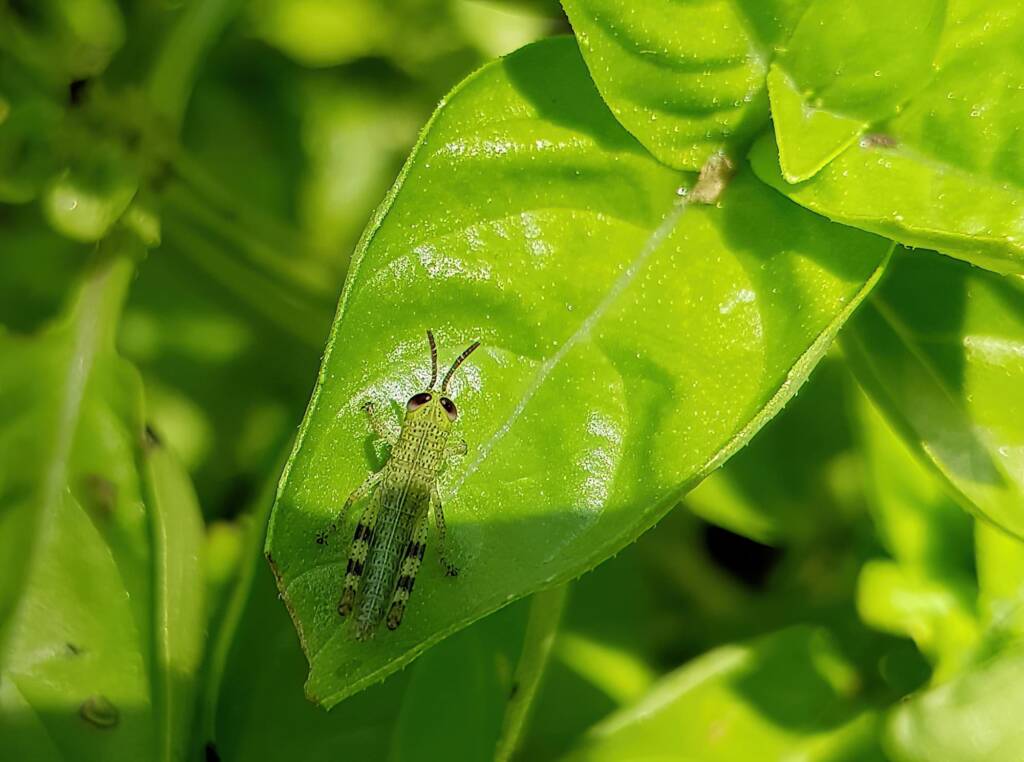
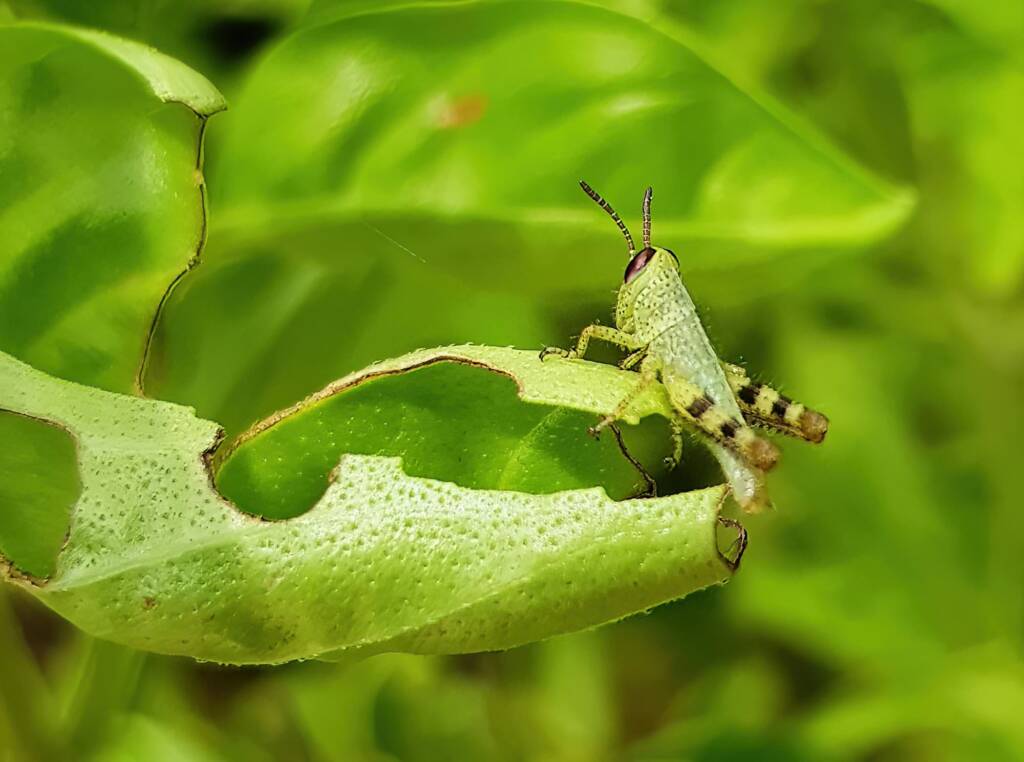
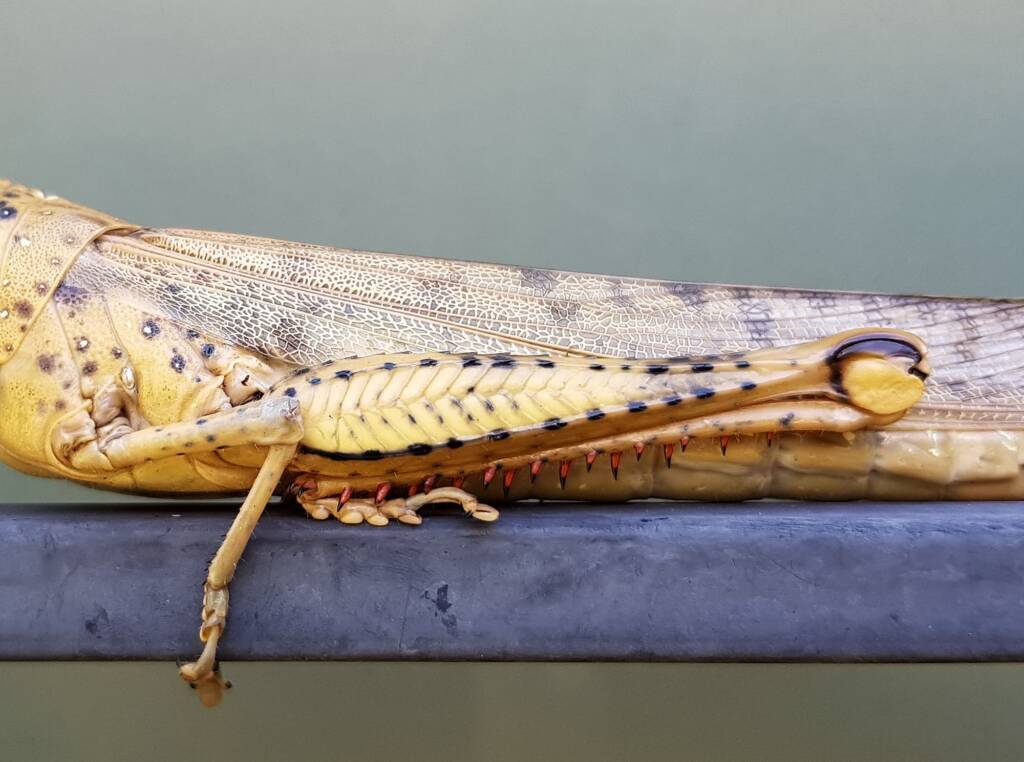
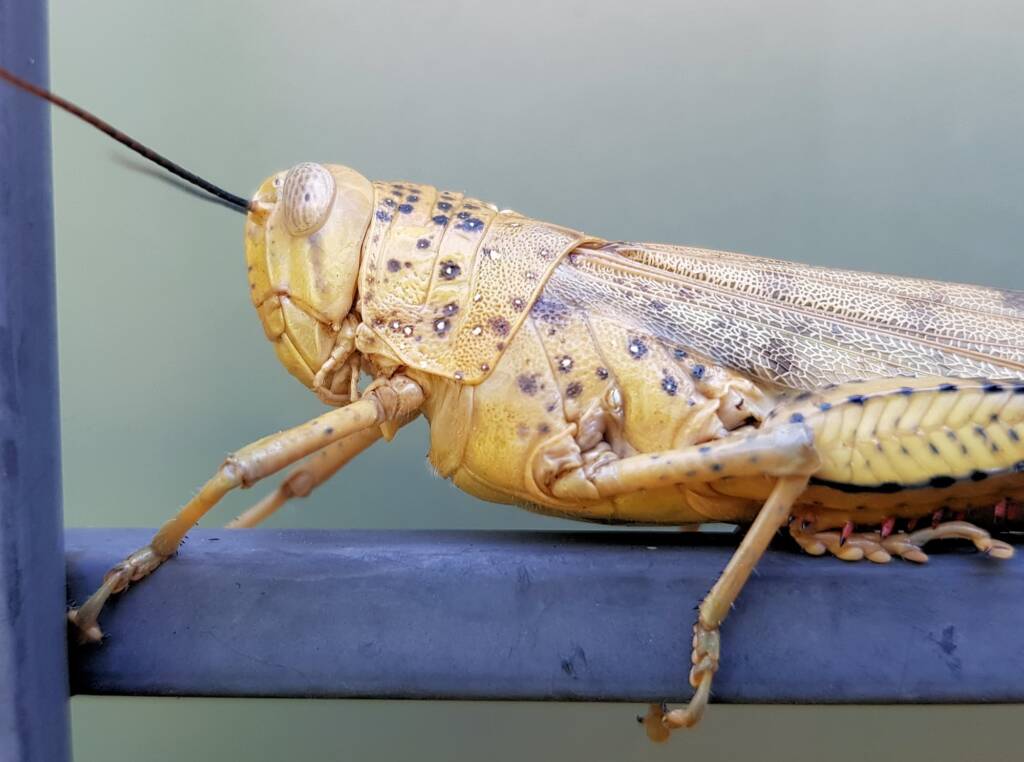
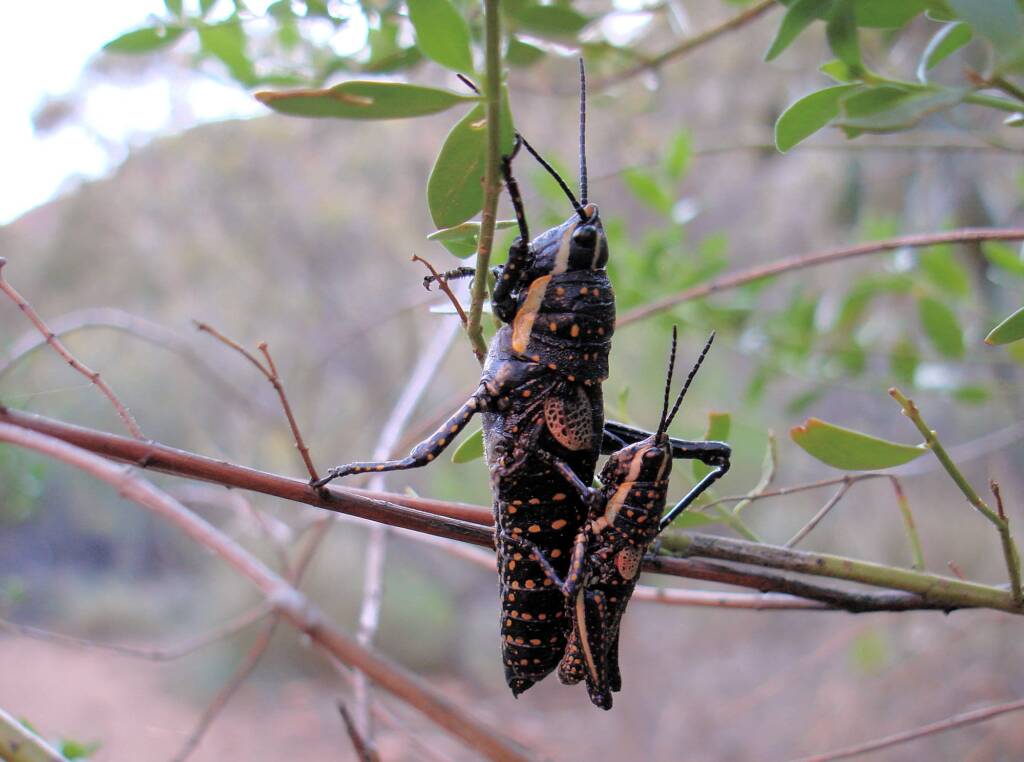
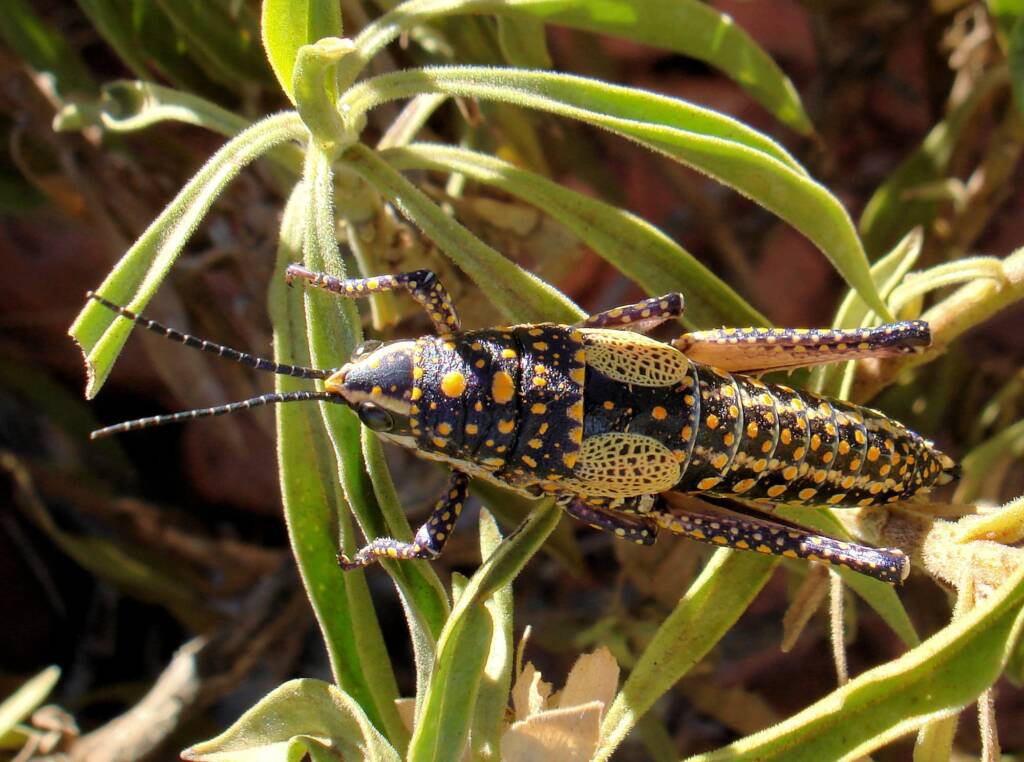
When some species of grasshopper develop gregarious behaviour (this occurs under suitable environmental conditions), massing together in large numbers, they take on “locust behaviour”, appearing to form an organised group.
This crowding behaviour sees them roving around as bands of “hoppers”. They then grow larger and change colour, become much more attracted to each other, their behaviour becoming more that of a social insect, and then maturing into flying insects. This then leads to them “swarming”.
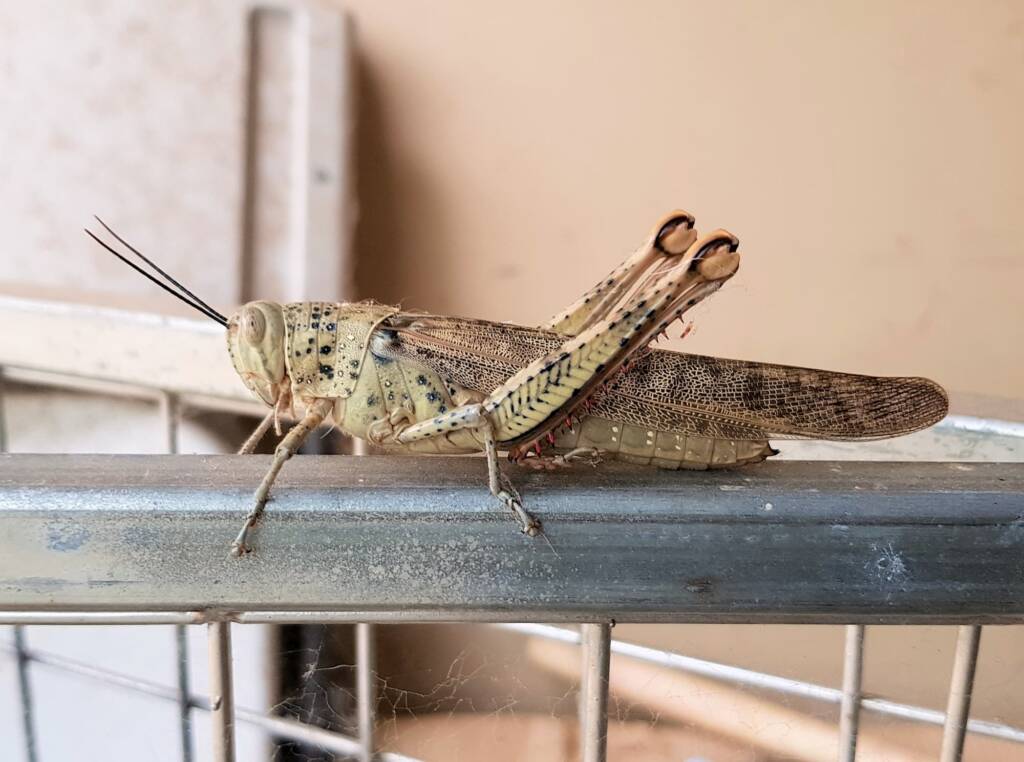
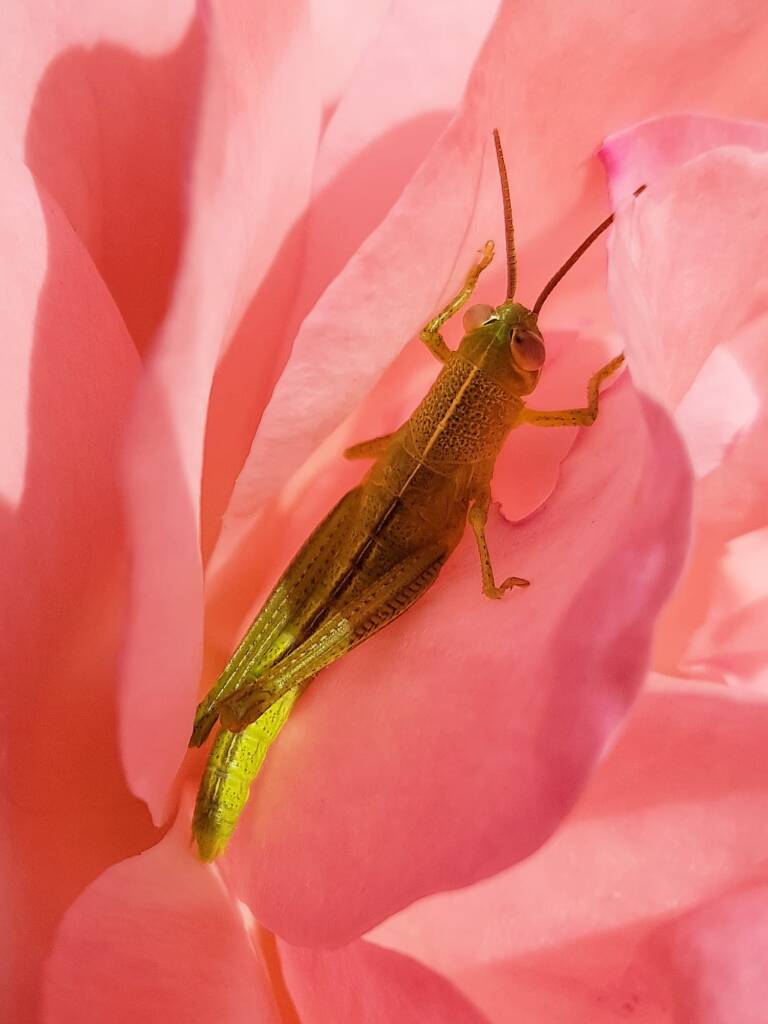

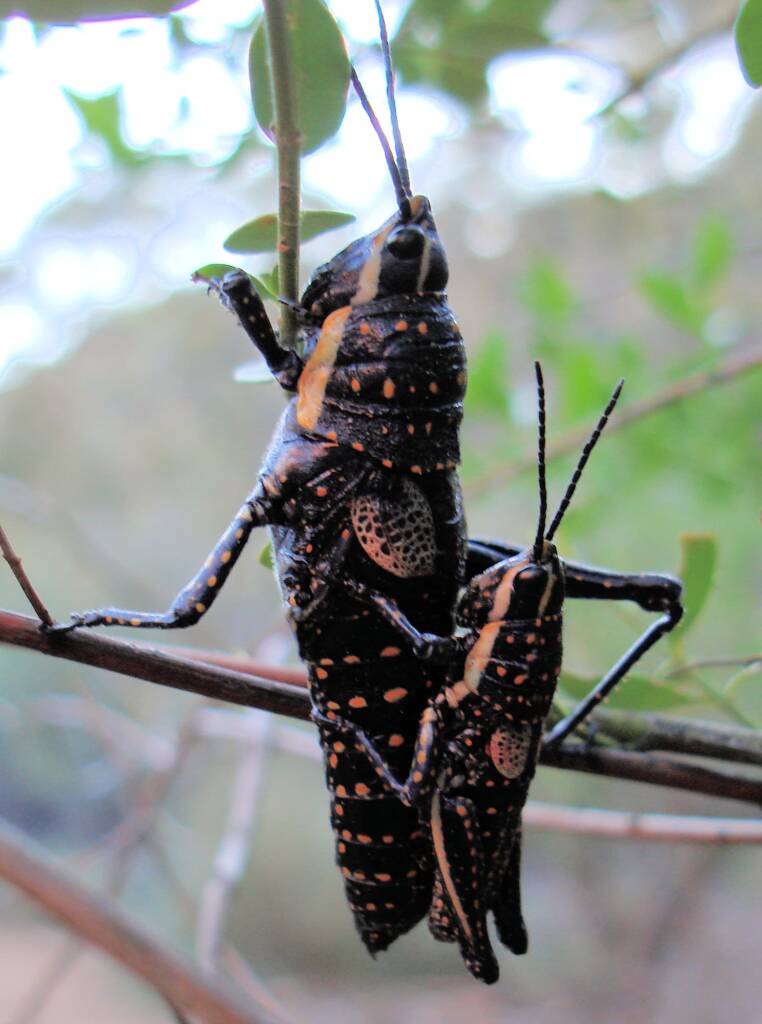

The Locust is not a species, rather it is a particular phase in the life cycle of certain grasshoppers from the infraorder Acrididae.

So what is the difference between grasshoppers and locusts?
Some simple differences are:
- Grasshoppers
- Daytime insects
- Usually solitary
- Short antennae
- Jump and fly short distances
- Locusts
- A type of grasshopper (not a separate species)
- Can change behaviour and colour
- Form massive swarms when conditions are right
- Famous for destroying crops
- Crickets
- Mostly active at night
- Long antennae
- Make the classic “chirping” sound
- Usually live in grass, soil, or near houses
- Locusts = grasshoppers in “swarm mode”
- Grasshoppers = daytime jumpers
- Crickets = nighttime chirpers
Following is Stropis nigrovitellina, commonly known as the Leopard Grasshopper or the Variable Stropis.
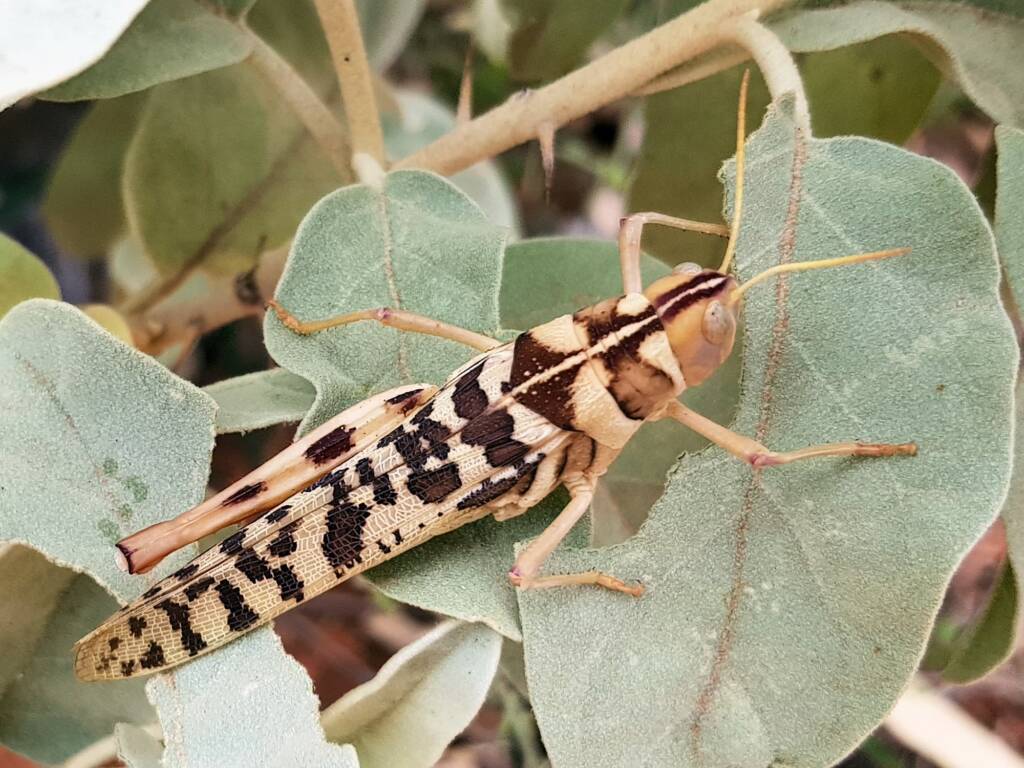

Whilst grasshoppers and locusts are a food source for many creatures including birds, spiders and other insectes, they are also consumed by humans in many countries where they are regarded as a source of rich protein.
- Scientific classification
- Kingdom: Animalia
- Phylum: Arthropoda
- Class: Insecta
- Order: Orthoptera
- Suborder: Caelifera
- Infraorder: Acrididea
- Informal group: Acridomorpha
- Superfamilies:
- Acridoidea
- Eumastacoidea
- Pneumoroidea
- Proscopioidea
- Pyrgomorphoidea
- Tanaoceroidea
- Trigonopterygoidea

Footnote & References
- Grasshopper, https://en.wikipedia.org/wiki/Grasshopper (last visited Oct. 28, 2022).
- Grasshoppers (Infraorder Acrididea), iNaturalistAU, https://inaturalist.ala.org.au/taxa/700600-Acrididea
- Short-horned Grasshoppers and Locusts (Superfamily Acridoidea), iNaturalistAU, https://inaturalist.ala.org.au/taxa/47650-Acridoidea
- Grasshoppers, crickets, katydids and locusts: Order Orthoptera, Australian Museum, https://australian.museum/learn/animals/insects/grasshoppers-crickets-katydids-and-locusts-order-orthoptera/
- Orthoptera: grasshoppers and locusts, Insects and their Allies, CSIRO, https://www.ento.csiro.au/education/insects/orthoptera.html
OrthopteraAustralian Orthopteroid Index Garden Mantis Grasshoppers and Locusts Grasshoppers Blistered Pyrgomorph Coryphistes sp Giant Grasshopper (Valanga irregularis) Leichardt’s Grasshopper (Petasida ephippigera) Macrotona Queensland Spotted Pyrgomorph (Greyacris profundesulcata) Katydids (family Tettigoniidae) Phaneropterinae Psedna nana (Variable Psedna Grasshopper) Toadhopper (Buforania crassa)
InsectsInsects Index Insects Life Cycle… Bees Beetles Blattodea Butterflies Coleoptera Cicada Crabronidae Diptera Dragonflies & Damselflies Formicidae Hemiptera Heteroptera Mantodea Moths Neuroptera Orthoptera Orthopteroid Processionary Caterpillar Stink Bugs, Shield Bugs and Allies Wasps Water Scorpion (Laccotrephes tristis) Witchetty Grub