
Author Koh Lin ◦
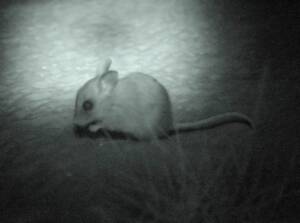
I was thrilled to observe the distinctive and cute numbat…
The numbat, also known as the noombat (in the Noongar language) or walpurti (in the Pitjantjatjara language), is a small distinctively-striped, pouchless marsupial, between 35 to 45 centimetres (not including the bushy tail). Sometimes referred to as the banded anteater, it is the only living species (Myrmecobius fasciatus) in the genus Myrmecobius, family Myrmecobiidae. Active during the day (diurnal), the numbat is an insectivorous marsupial, whose diet consists of termites. At night they sleep in tree hollows or burrows in the ground.

Their colour varies, from soft light grey to reddish-brown. Their upper back is a reddish-brown and they have a conspicuous black stripe that runs from the tip of the pointed muzzle through the eye to the base of the small, round-tipped ear. They have between four to eleven white stripes cross the hindquarters (that become fainter towards the midback), giving them their distinctive appearance. The underside of their body is a cream or light grey colour, and a bushy tail about the same length as their body, covered with long, grey hair flecked with white. They have five toes on the fore feet, and four on the hind feet.

The female numbat has no pouch, instead of a pouch the female has a patch of long, curled hair where the juveniles cling to her four nipples.
Once widespread across southern Australia, the species has been re-introduced to fenced reserves in South Australia and New South Wales, as well several small colonies in Western Australia. The numbat is the animal emblem of Western Australia.


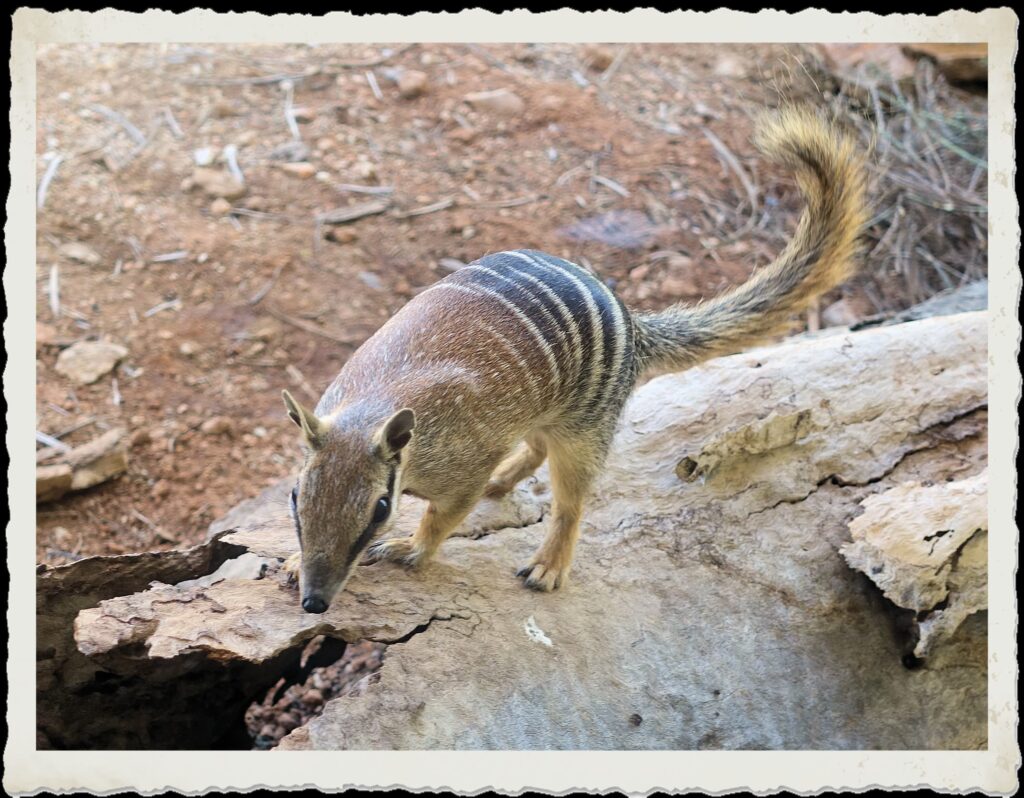
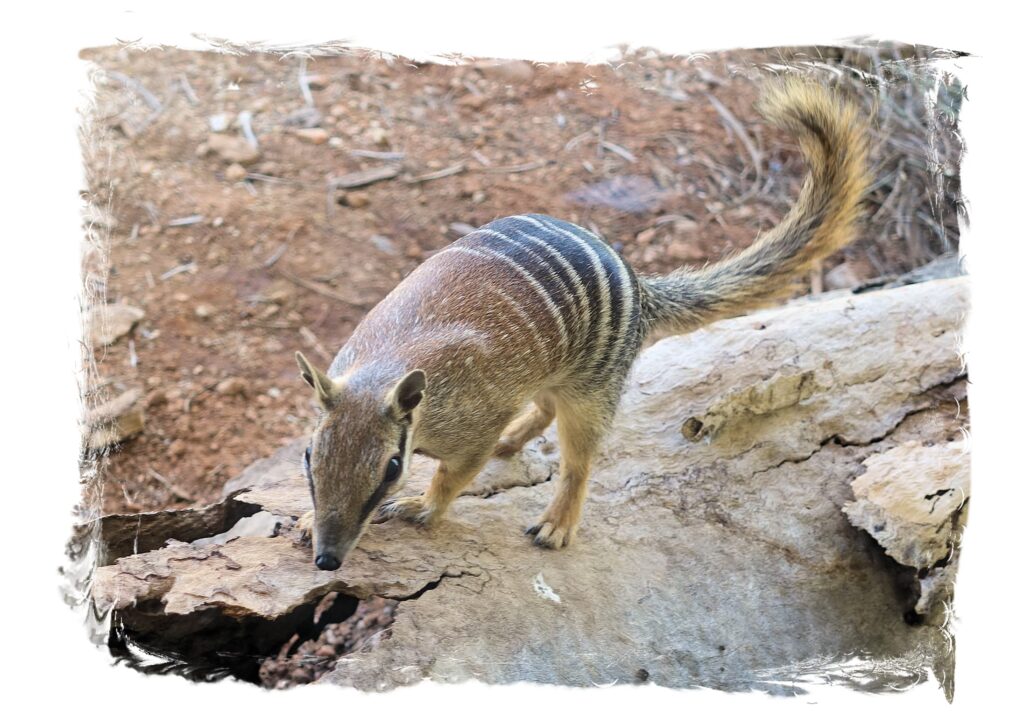
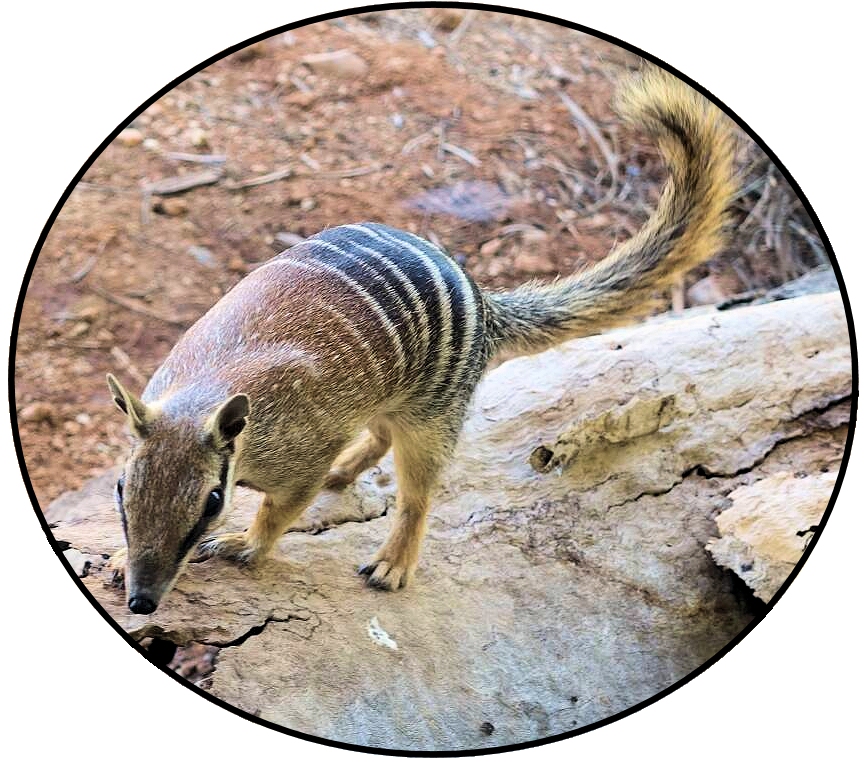
These photos of my encounter with the Numbat were from November 2021.
See Numbat for more information.
| DONATIONS We at Ausemade are passionate about the content. If you love our website, we welcome any donations to assist us in covering the costs that includes hosting, support and much more… click here to go to our Donations page. |