Author Koh Lin ◦
Since I have been observing the world around me, from rescuing insects from the swimming pool and dog drink bowl, to moving insects off the footpaths and those trying to cross the roads, my observation skills seem to have improved.
Among the many insects, the bees are among my favourite (checkout Alice Springs Bees). There have been many occasions when I have saved the Apis mellifera (Western Honey Bee) from the swimming pool. The genus Apis is Latin for ‘bee’, and mellifera is Latin for ‘honey-bearing’ or ‘honey-carrying’.
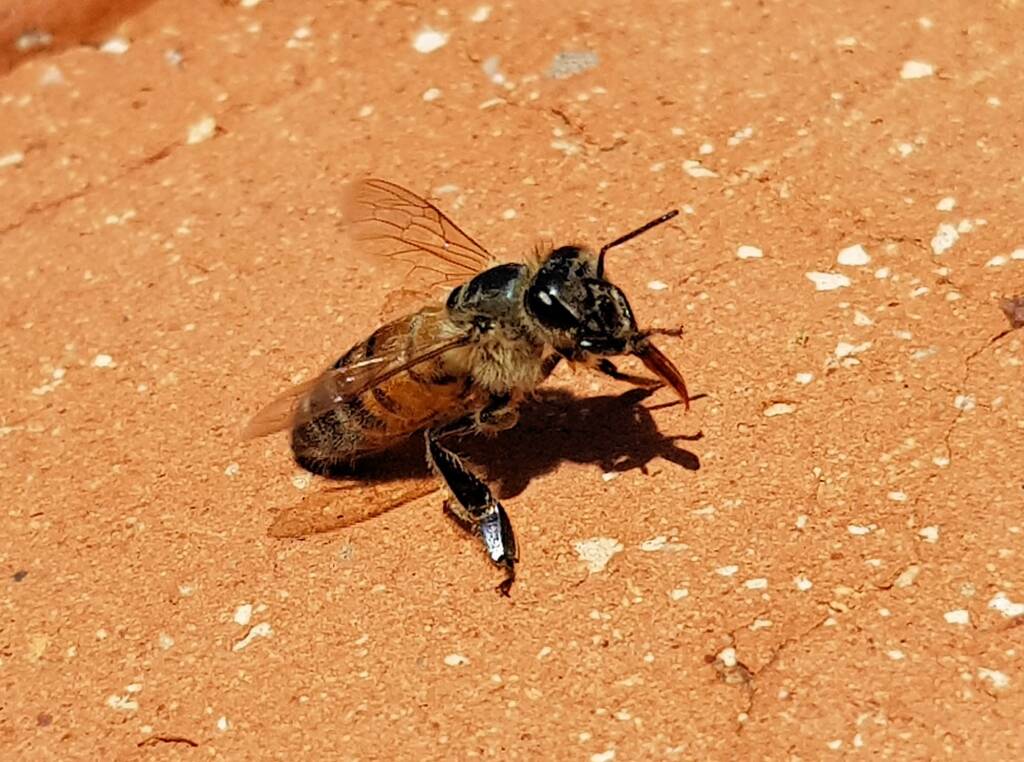
So I am really happy when I get to save a native bee… that include the Leioproctus sp. (pictured here shaking itself dry on my thumb).
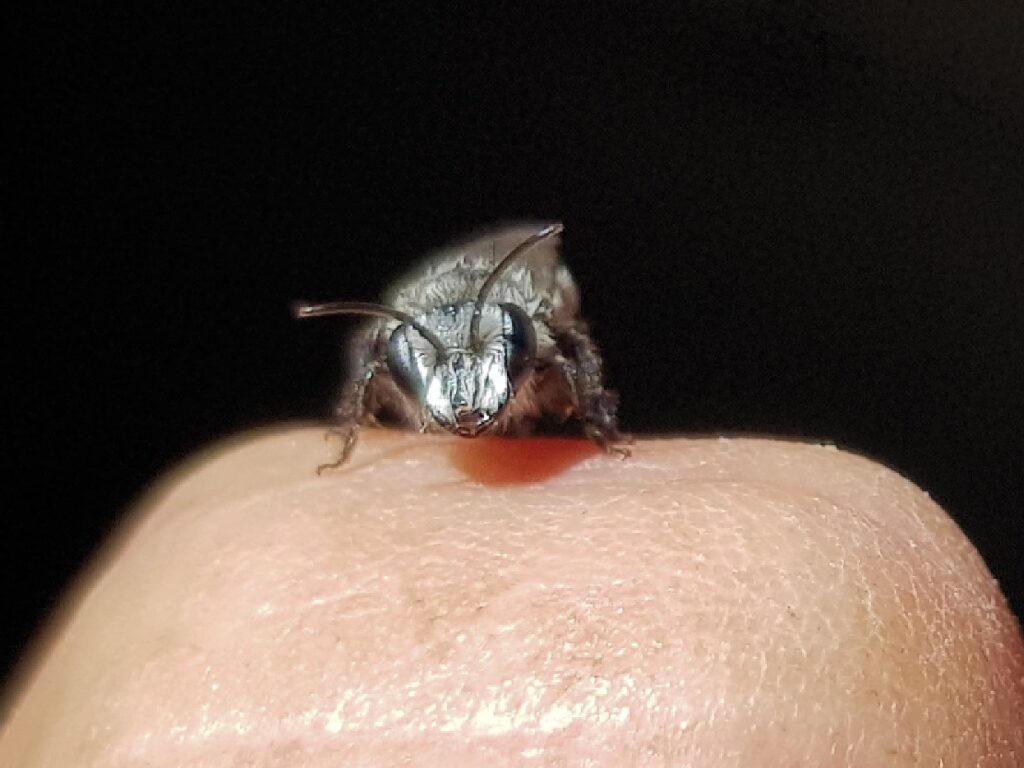
Another rescue was the Stenotritus bee (that belongs to a small family of bees found only in Australia — in the family Stenotritidae). I actually thought it was deceased, but then I noticed the slight expanding and contracting of the abdomen. I left the bee in a protected area to dry off and when I returned, it was gone (assuming it had flown off).
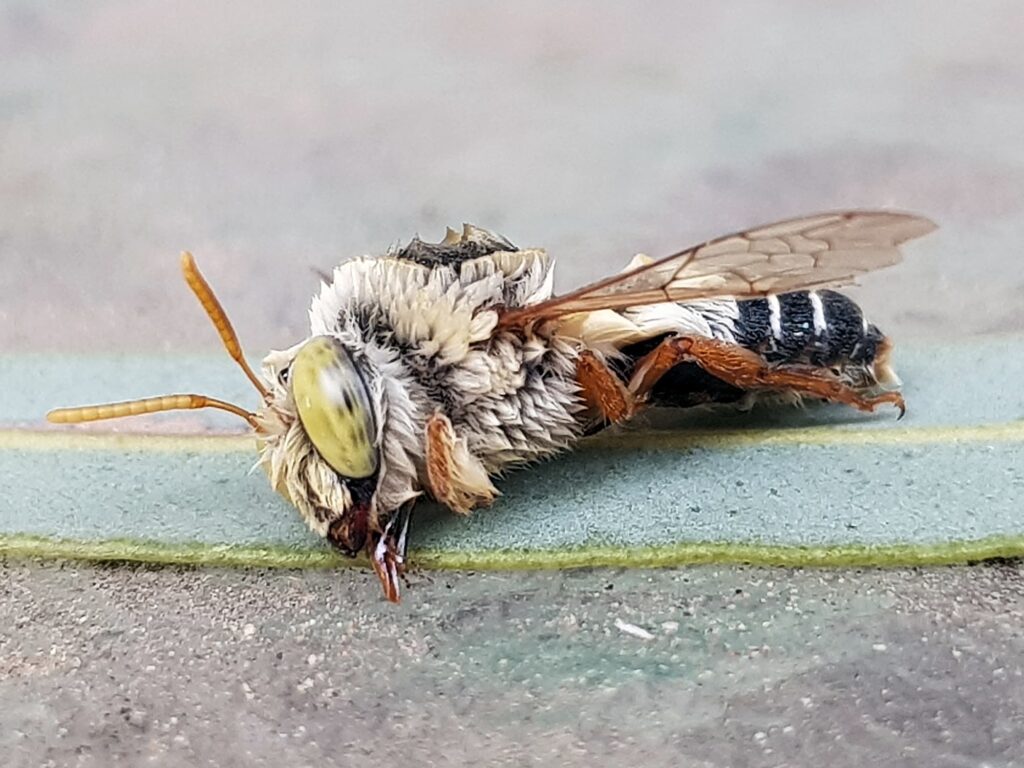
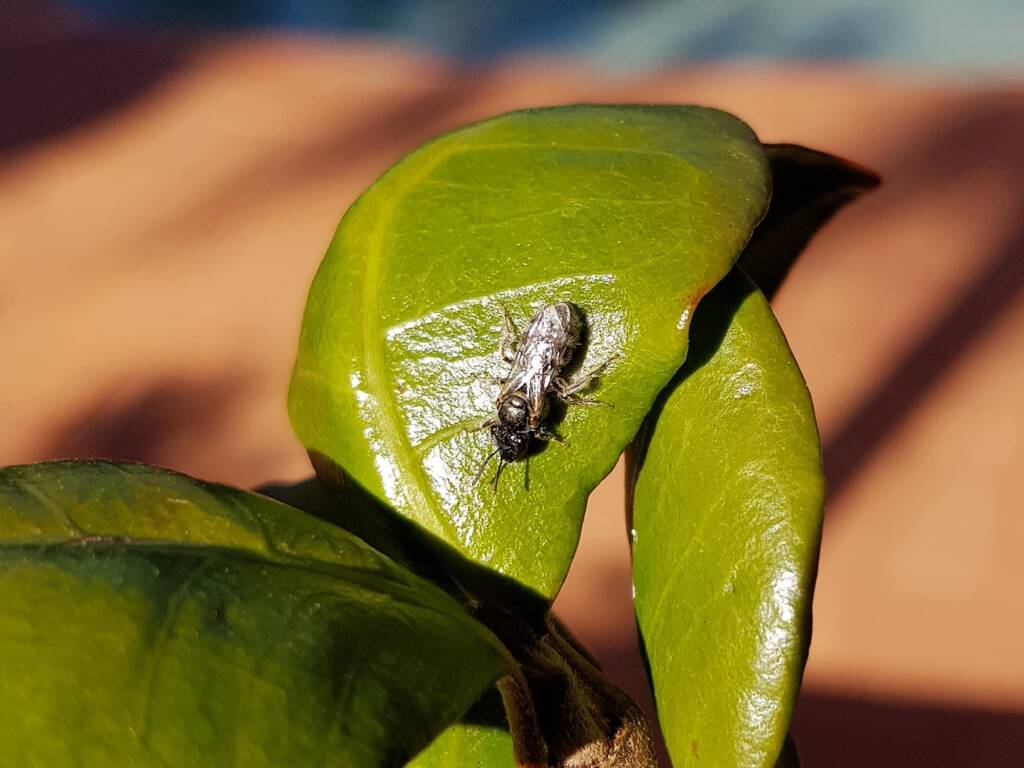
From the genus Braunsapis sp, is this commonly named Reed Bee (known for nesting in the hollow reeds and stems). It did not take long for the bee to recover, after being rescued from the swimming pool.
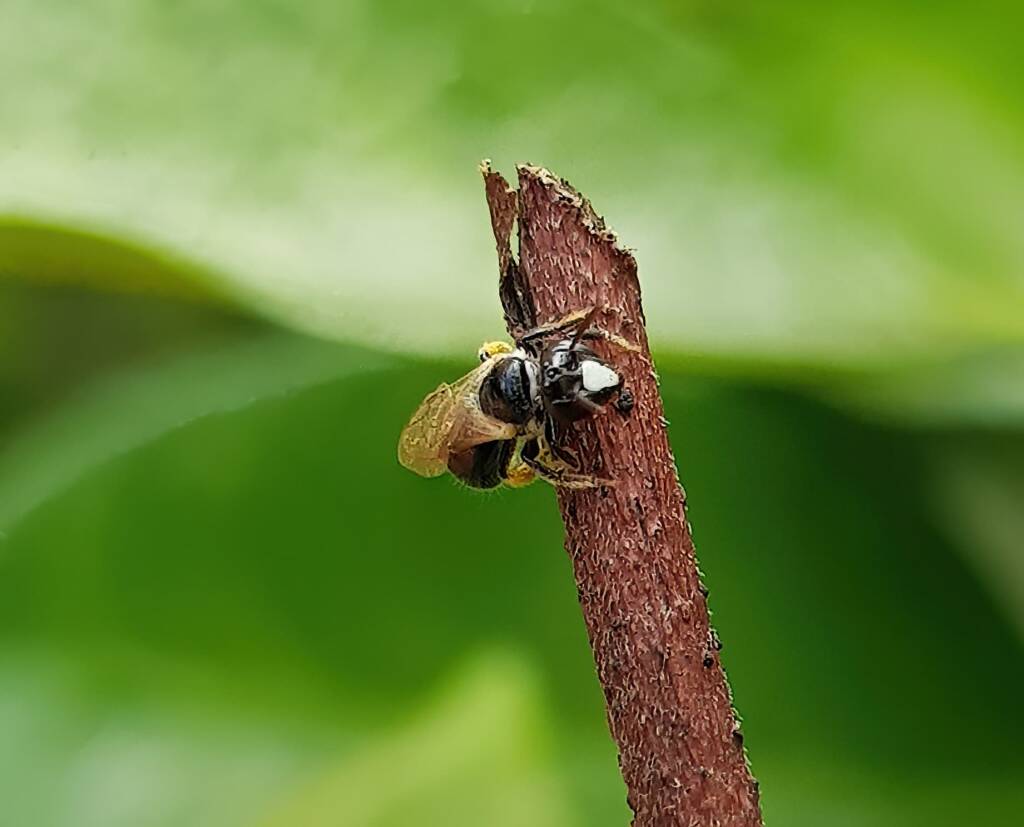
The striking looking Xanthesma vittata (a native bee species that occurs in central Australia) was rescued from a swimming pool in Alice Springs, Northern Territory.
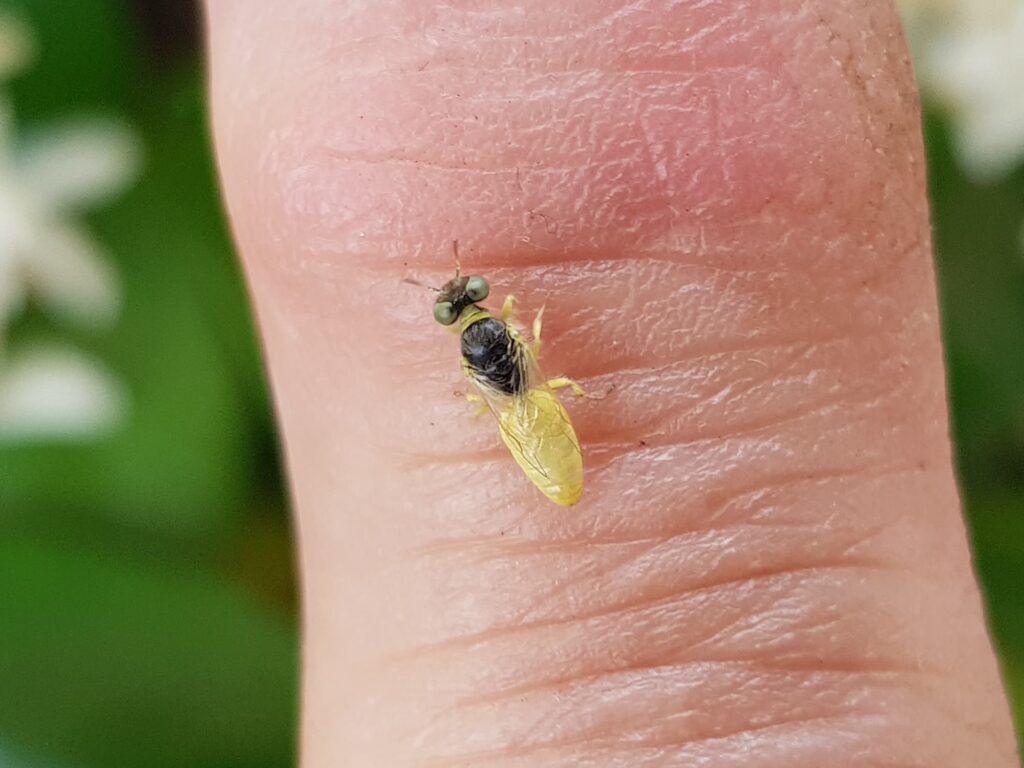
The stingless bee Bush Bees (Austroplebeia australis) drying it’s wings.
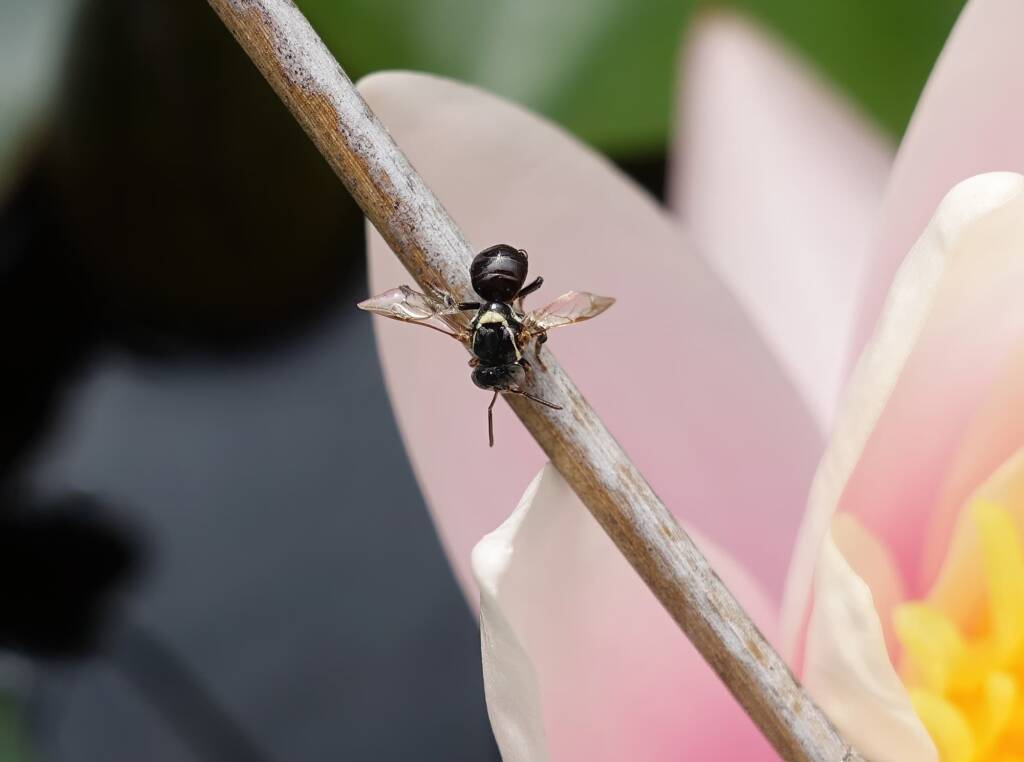
The Lasioglossum (Chilalictus) eremaean was rescued from the pool and left to dry on the nearby hedge.
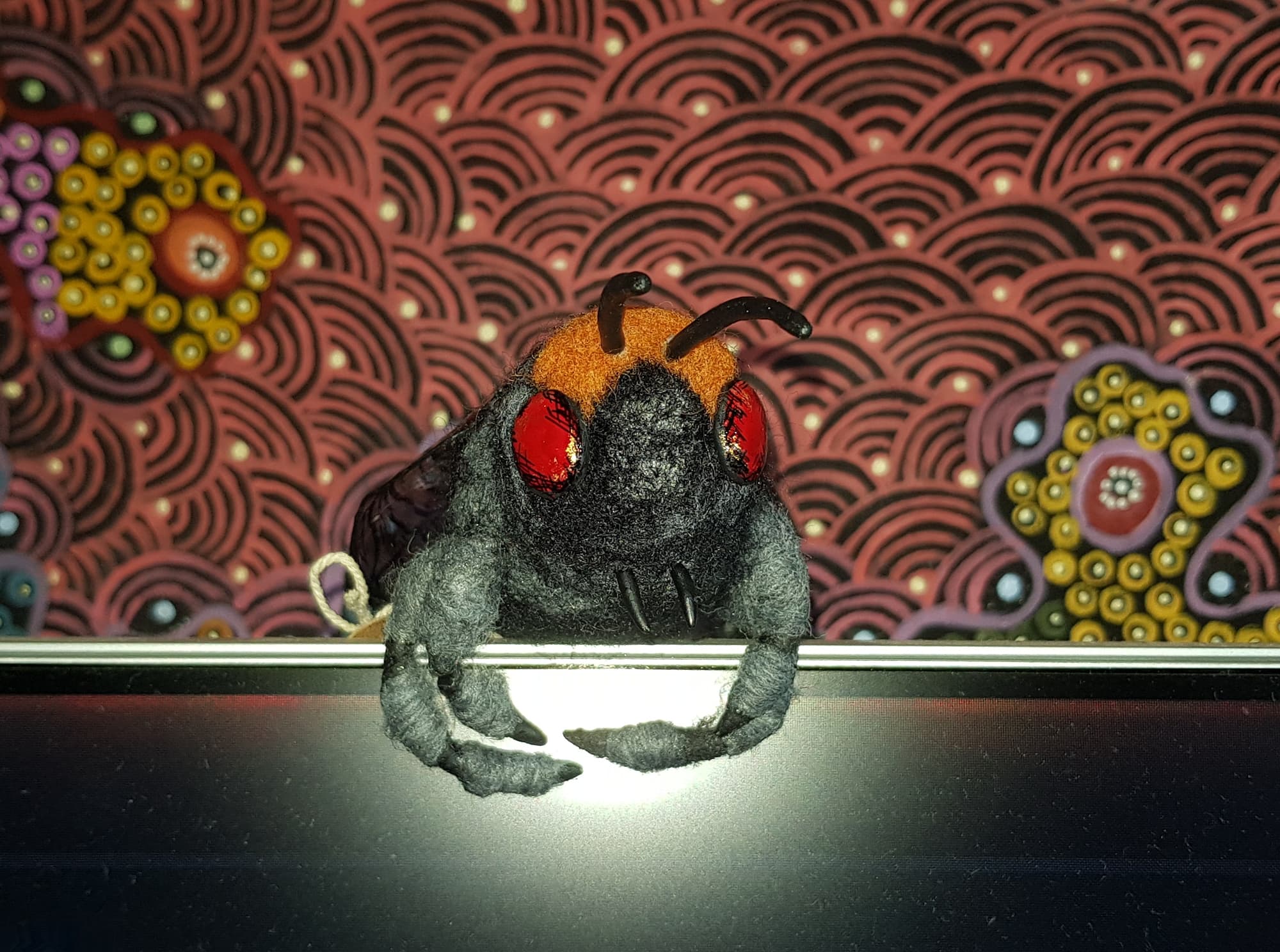
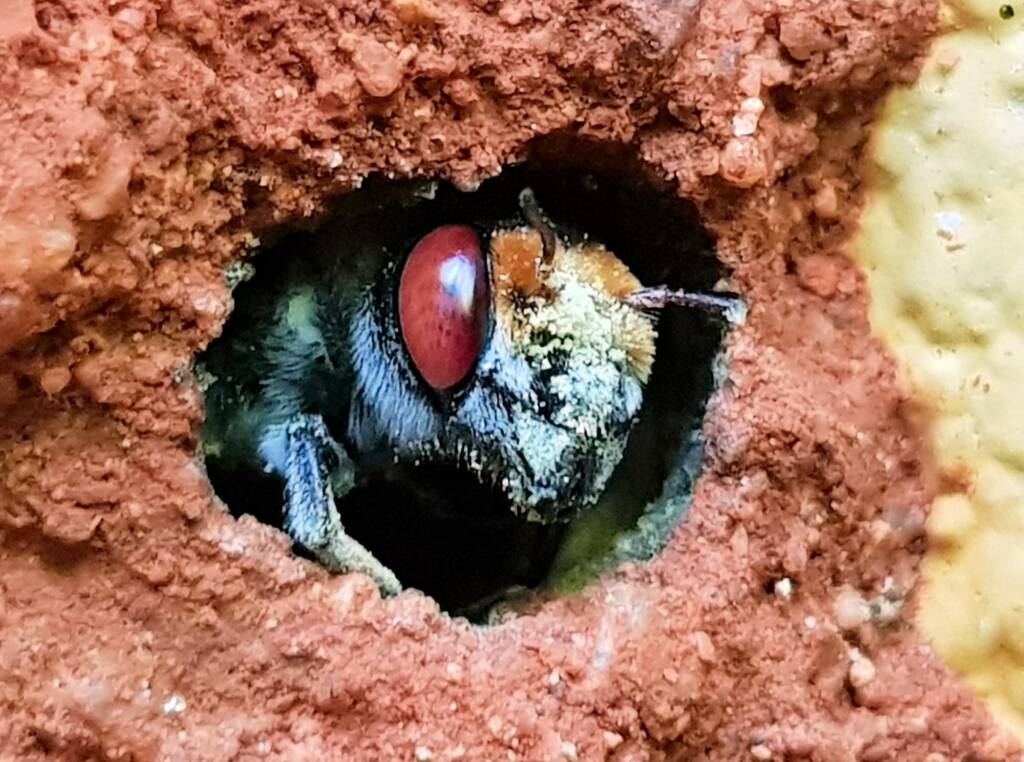
Whilst I have never rescued this species of native bee from the pool, I include the Golden-browed Resin Bee, as it is one of my favourite bees that I get to see at home and at my work place. The mud nest (built near the swimming pool) is a large structure that is actually created by the Potter Wasp Delta latreillei, and which the Megachile aurifrons take advantage of once the nest cells are vacated.
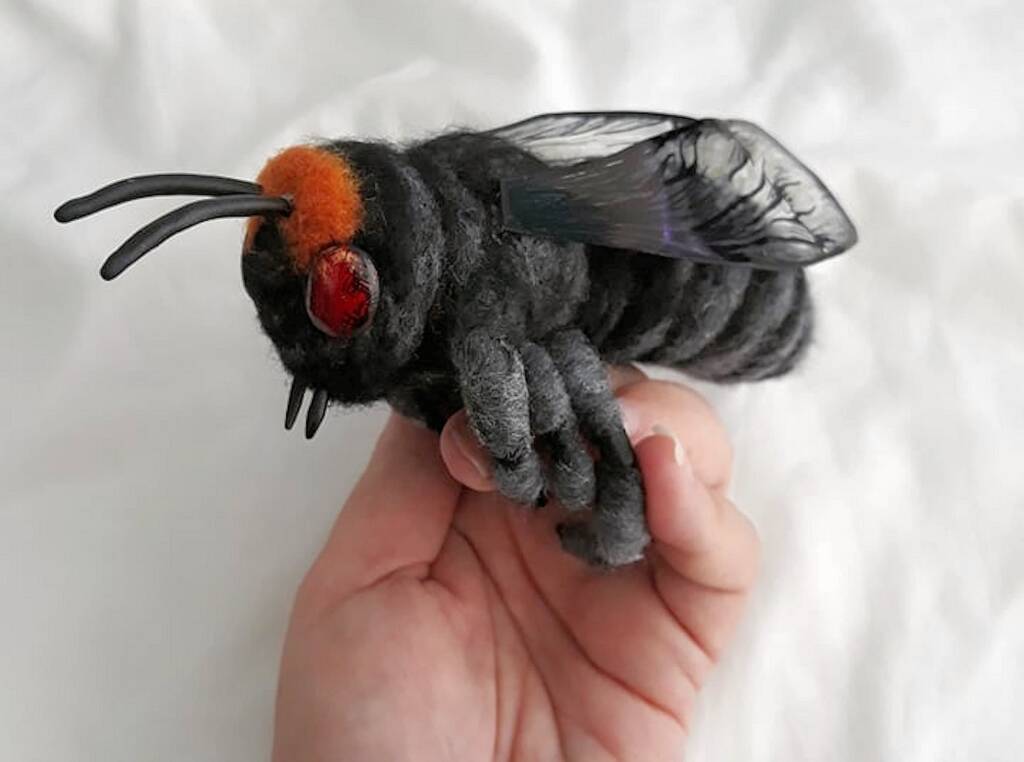
and here is my Golden-browed Resin Bee, beautifully captured in felt by Jane Gillard.